Literacy Narrative Part 3 Reflection
After completing the entire process of the literacy narrative, it—first and foremost—feels relieving but also I have definitely gained a new insight on the writing process and helped me meet the learning outcomes for this class.
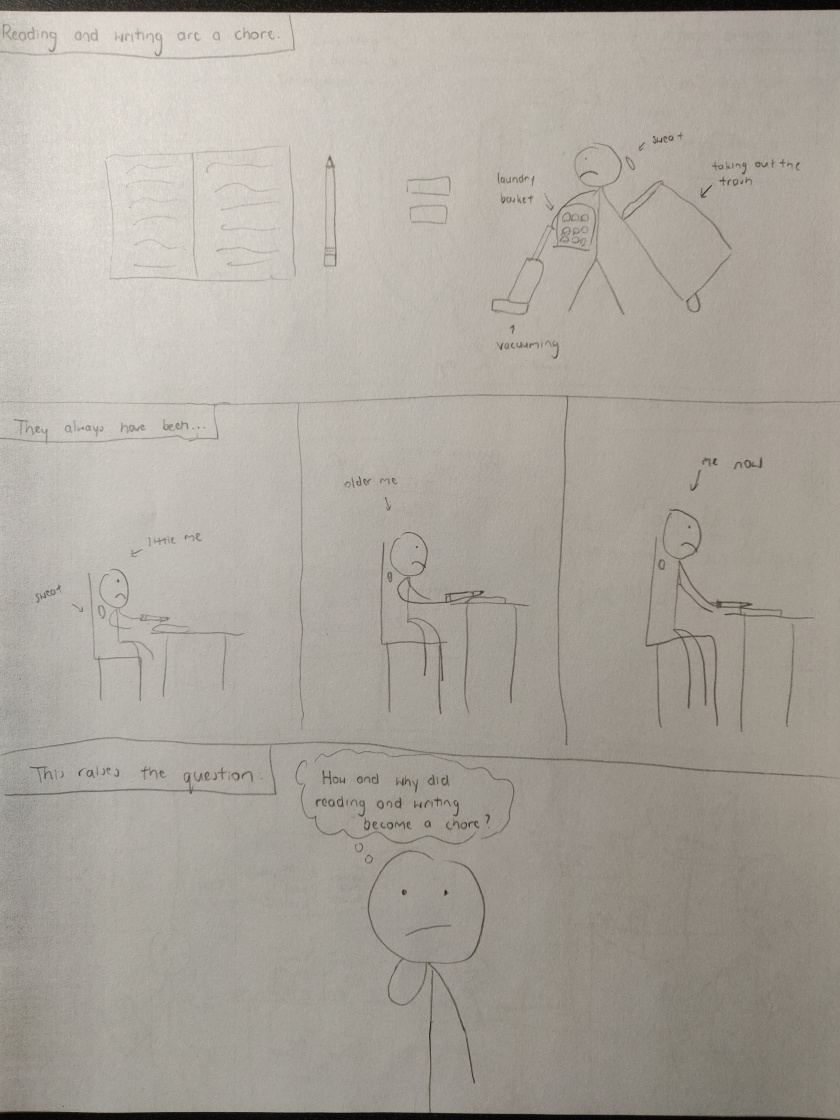
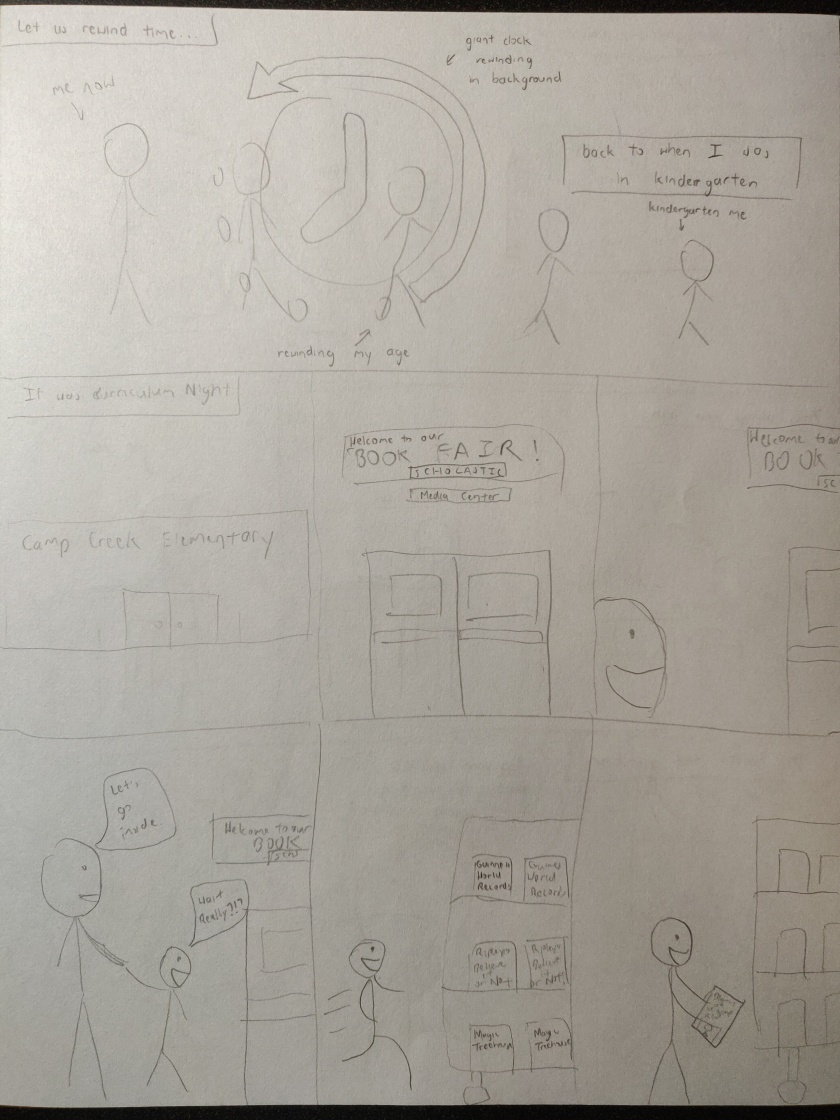
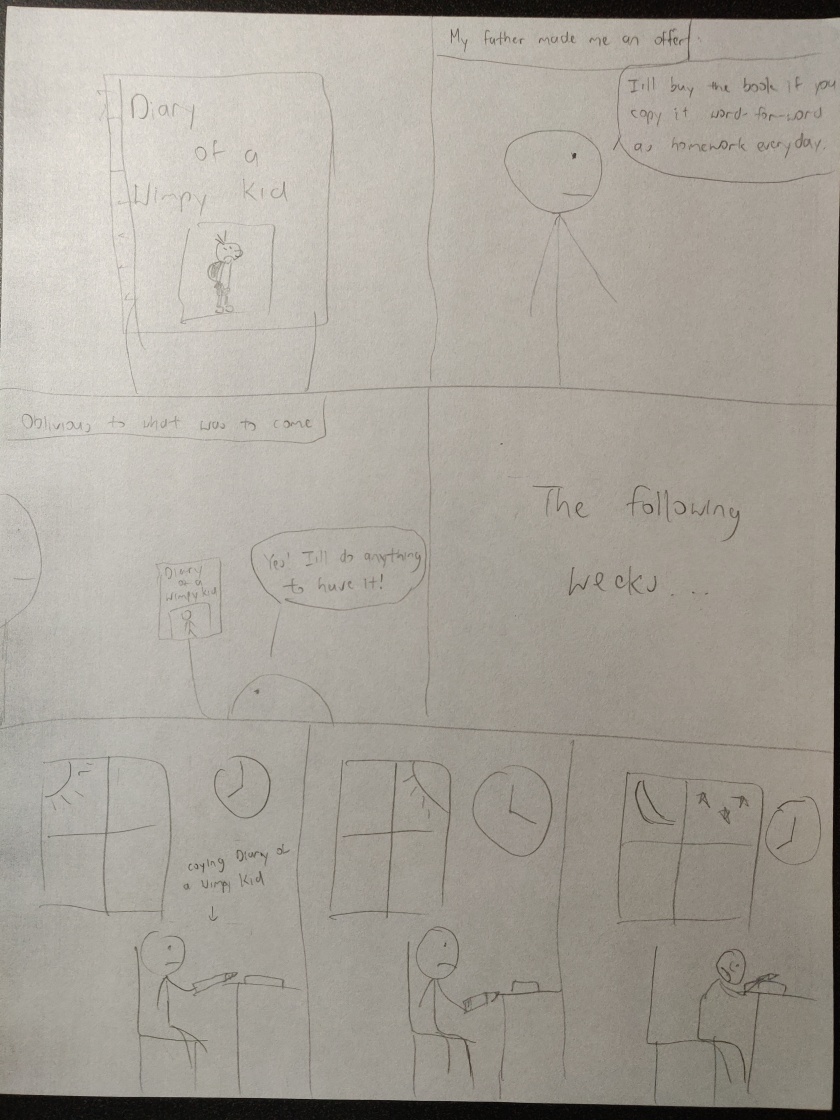
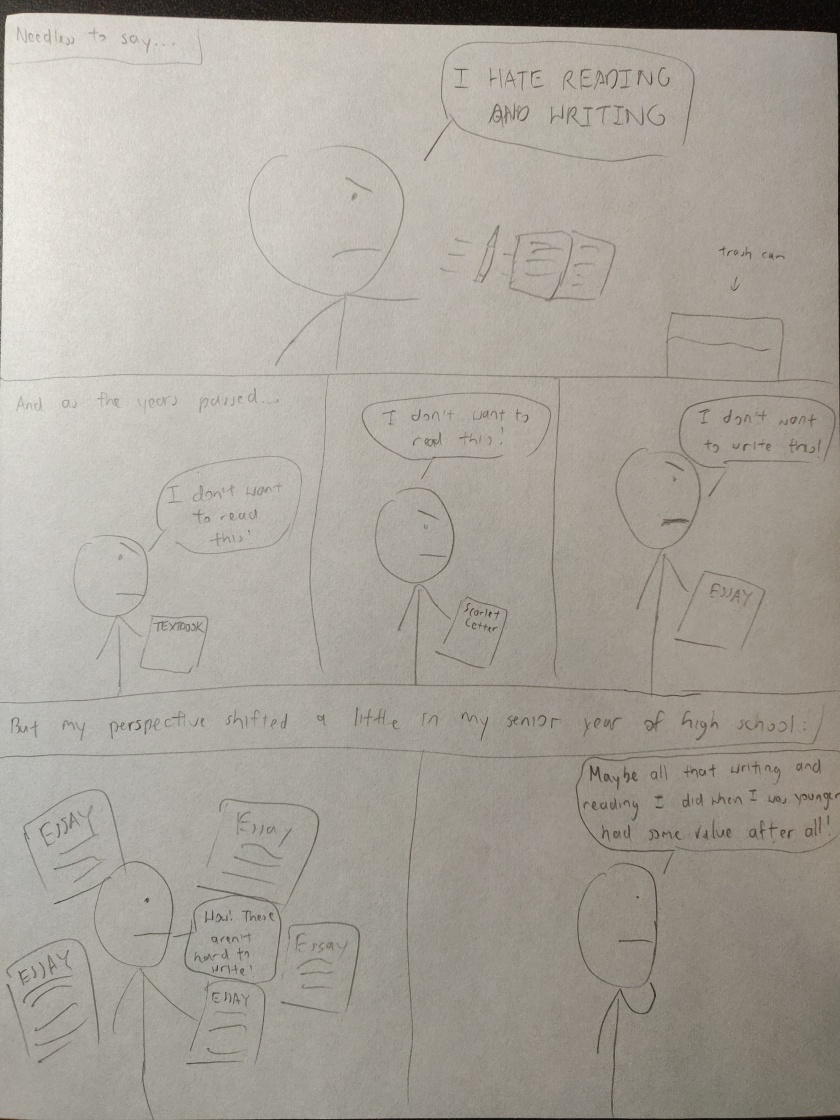
By first writing the alphabetic literacy narrative, I created the foundational “script” to then craft my comic. When I was writing my alphabetic narrative I was mainly focused on writing in the most descriptive way possible without going overboard either. However, once I was crafting my comic I became more concerned with what parts of my alphabetic narrative I should transcribe into a visual representation in addition to textual information and how to do so in a manner that the narrative would remain clear for my audience. When drafting the format of my comic, I looked back at the past readings we have done to see how the authors implemented their choices of moment, image, word, and such as Scott McCloud represented them in his Making Comics text.
This entire literacy narrative project really emphasized the concept of the writing process being long and including multiple revisions and drafts. I made at least two drafts for Part 1 and it still felt rough; I roughly sketched out a couple different possibilities for the format of my pages; I went back to Part 1 and sort of completely redrafted it, changing the organization and adding some details. After having worked in the visual medium then returning to a text narrative, it’s what helped me reorganize my timeline as well as encouraging me to use photos in my post that also added to the narrative as it’s being read. That being said, while my comic is definitely full of more visuals than this final copy of my literacy narrative, I think I do fall short in some of the visuals in my comic simply because I don’t have such high artistic skills. Having worked in the visual medium before returning to text once again made me think of more ways in which I could be more descriptive—areas in which I thought my comic’s visuals themselves lacked detail.