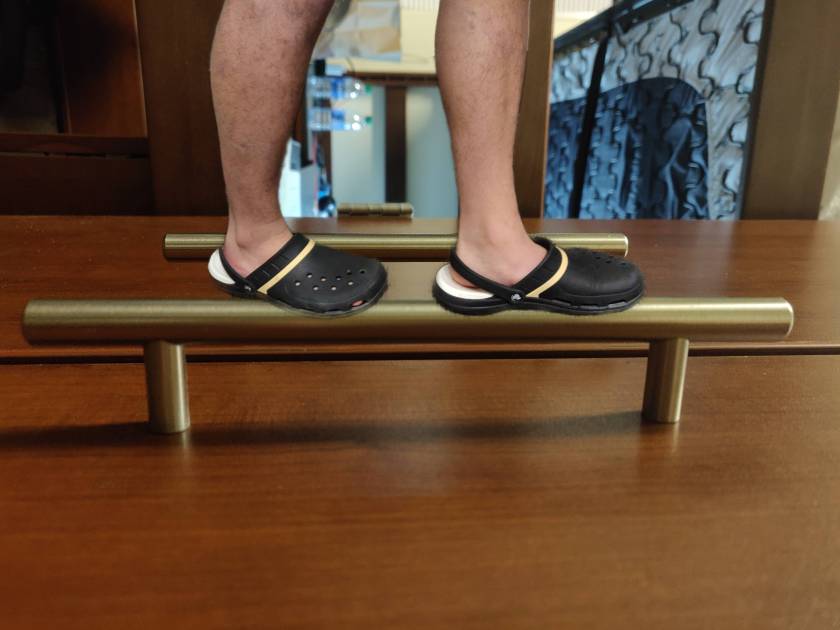
A combination of a photo of my legs and a photo of my wardrobe handles, both taken by me
For this Sunday Sketch, I knew I wanted to take the photos myself, so I started the search in my dorm room for things I could take photos of. The first objects to catch my eye were the handles on my wardrobe closet; they looked like balancing beams. After snapping a picture of the handles, I proceeded to take a picture of my legs. Using PicsArt, I combined the two photos to make it look like I was balancing on one of the wardrobe handles. PicsArt really made it easy to combine the two photos because there was a feature that automatically removed the background from my legs photo. I believe the finished result perfectly embodies what I am doing right now—trying to balance on the beam that is college life.
At first, I had trouble coming up with the idea of this week’s Sunday sketch. I was looking around my room for the mere semblance of an idea. I decided to direct my focus to things that I am passionate about, thinking that would give me an idea. Since I had my violin near me, I thought incorporate a violin into my sketch. However, I did not like any of the ideas I came up with, so I shifted gears to some of my textbooks. I took a class about Socrates last semester, and that is where the idea of this sketch was born. I decided to merge Socrates’s face with a highway tunnel. I went into the class last semester intimidated not knowing anything about Socrates, which represents the darkness of the tunnel. Additionally, the class was about determining whether Socrates was innocent or guilty based on his charges. In the beginning, I found Socrates’s trial to be full of mystery, which is also why I think these two images pair well together.
While browsing through photos on Google, I was searching for photos relating to food and a specific color. I initially was going to combine a photo of Almond Joy and a glacier, but I decided not to because I couldn’t find a good glacier photo. Then, I came up with the idea of powdered sugar being dusted on a dessert mountain. It took me a bit to delete the unnecessary part of the hand photo because it was a little meticulous. The lighting of the hand and the mountain was off, so I had to play around with filters to make it as close as possible. The final image is a mountain being dusted with powdered sugar.
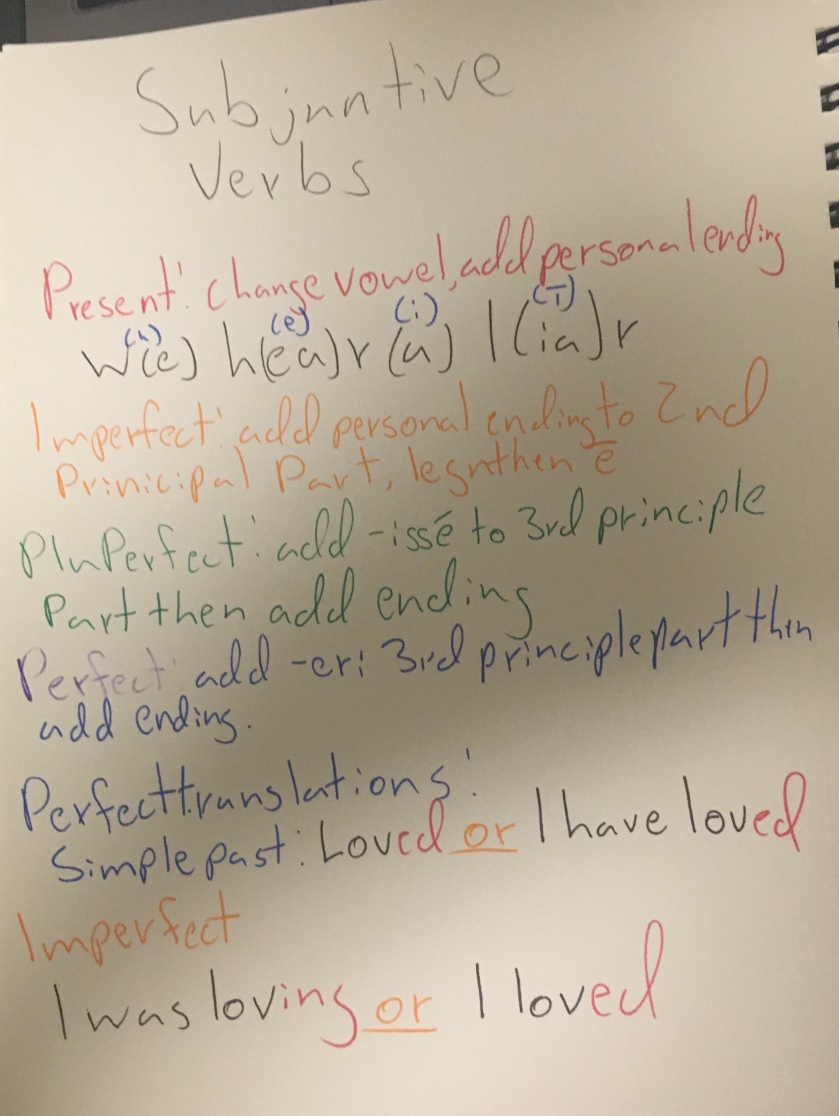
(Apologies for the poor photo, my dorm is lit rather poorly)
So, as you can tell, I’m not the greatest at visual notes. Which is strange because, back in middle school and early high school, those were the only kinds of notes I took. I think the main reason now is just because, I just don’t take a lot of notes. I know I know that makes me a bad student in the eyes of a few but I’m a theatre major. In my theatre classes we don’t learn by lecture and note taking, but rather by practice. In fact, most of my classes we just don’t lecture anymore. Most of my note taking is done outside the class room while reading whatever assigned text I have. These aren’t even from a class but rather from my latin tutoring, and with latin being structured the way it is they’re no strong visual components for the subjunctive verbs. It is nice to do my notes in different colors again. Having them separated by color somehow lets me compartmentalize them easier. If I ever do go back to re do a sketch assignment. It will probably be this one.
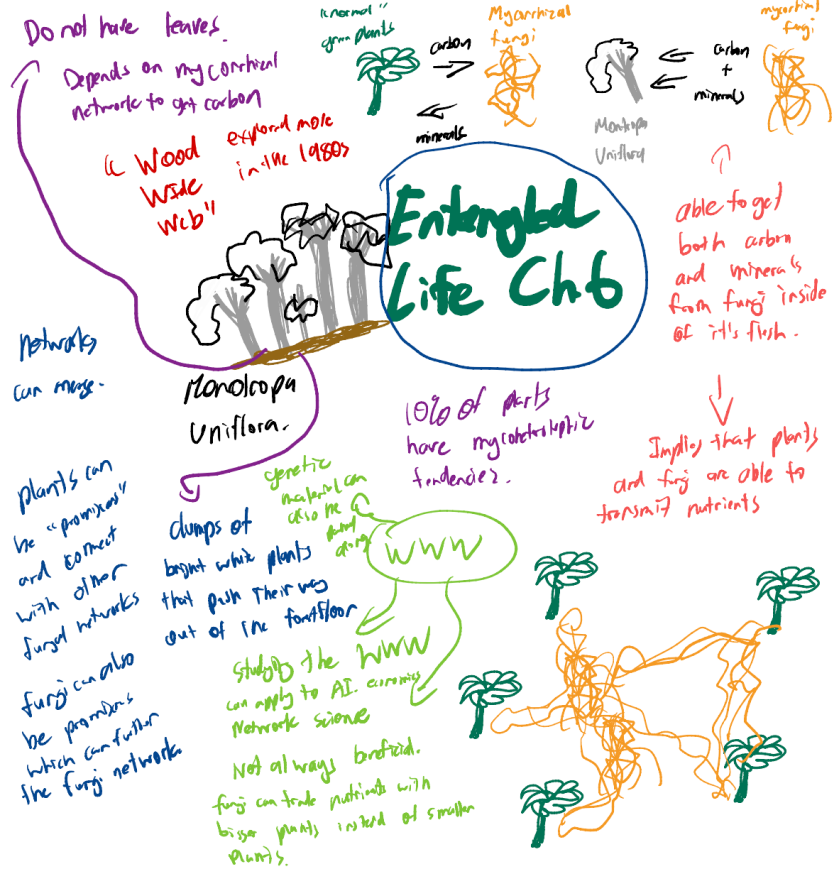
During the process of creating my visual notes, I learned that it is much easier to take notes visually. It saves a lot more time compared to writing notes traditionally, and creates an actual image that my brain can remember instead of pure text. It is also much easier to connect ideas through visual notes as it is more free flowing and does not have to follow a structure. I found the overall process very enjoyable because I did not have to confine my thoughts, but I can let them flow freely. I think I might start taking notes for some classes in a more visual format from now on.
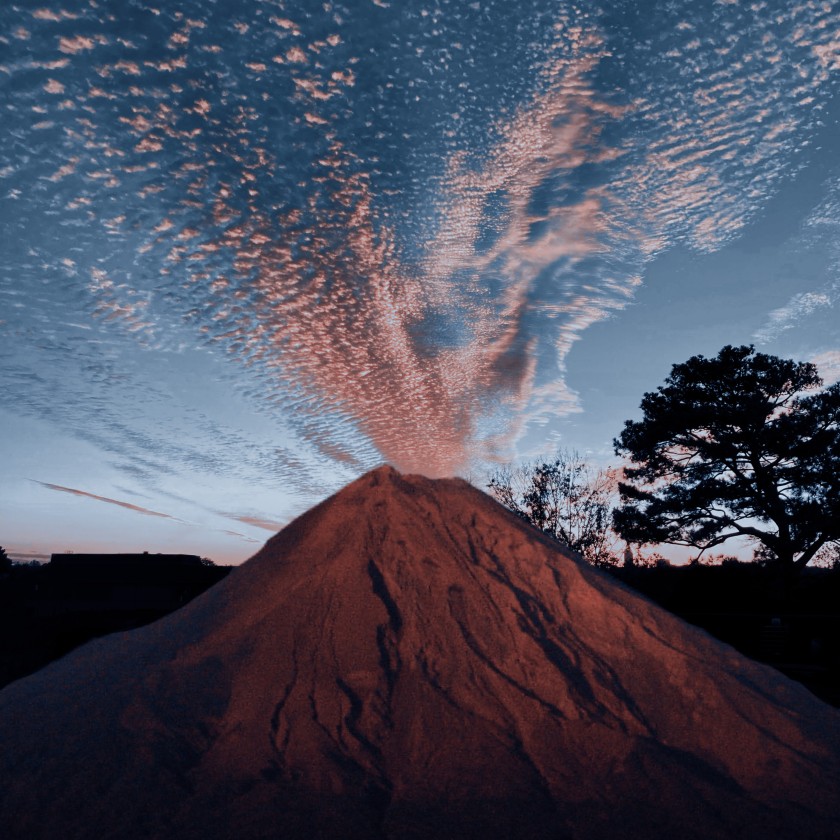
Background sky photo taken by me. Ometepe Volcano photo from Flickr.
This Sunday sketch was a bit challenging but I enjoyed it! The examples provided through the instructions were very cool and instantly reminded me of a forced perspective assignment I once had in my high school photography class. I find forced perspective photography much more difficult compared to this assignment though because I have to find actual items I can physically work with, which can limit my ideas. On the other hand, I have the entire internet and CC licensed images to work with for this assignment—the slightly challenging part is just deciding what photos to use and how. I remember, for that forced perspectives photography assignment, I had used a small teapot, held it out, and aligned it with a light cloud on the sky so it looked like steam coming out from it. Initally, I wanted to recreate that, but this time “digitally” using photos from Flickr—I found the prettiest teapots—but I could not find an appropriate cloud photo, so I started going through my own camera roll of endless sky photos. As I scrolled through, I found some sunset photos I took last semester while I was on campus, and then a new idea hit me. When I showed my mom those photos a few months back, she had mentioned how the clouds looked like some sort of explosion, so I decided to switch up my idea—just a bit, still on the topic of some sort of steam coming out from something—and looked for volcano photos on Flickr. I was not finding any that I thought were good, until I came across this one of the Ometepe Volcano in Nicaragua, and I just knew it was perfect.
I used Picsart to crop the volcano and put it over my photo; I also darkened the silhouettes in my photo. Then I used Polarr to add a filter on the image.
For my visual note-taking exercise, I chose to reformat a section of my Continued Writing Course “Thinking with Fungi”. During the section, I wanted to really try to use flowcharts drawings, and non-conventional word placements to create a page that would help me “take-in” the material easier. I am more of a visual learning and I think that this helped in a way that I had the freedom to group things however I want as opposed to the “vertical” organizational structure of notes inside of a document would be like. Before doing this assignment, I had a process of thinking about a rough idea of how I wanted to organize the ideas and what kind of images/graphs I wanted to put inside of it. I found it enjoyable because I was just exposing myself again to the material I had just learned, and I was able to do some drawing of the fungi and plants. However, I think that I would not do this regularly because it took up more time and it takes more effort to hand write out notes that I have already typed, and this was for a writing class which would make it hard for me to organize the notes if I were to write an essay using points from the notes.
Remember that last week I had mixed information about which sketch to do so if you made a combophoto last week then this week you should make visual notes.
We will spend time in class on Tuesday giving each other peer feedback on the literacy narrative comic storyboard, which means before class that day you will need to get your storyboard posted on your sites. If you’re hand-drawing the comic then take photos of the pages and upload them. If you’re creating your comic digitally then export the draft as jpg files and upload them. The key thing for our peer editing time is that you should have a rough sketch of an entire comic such that your classmates can look at it and get a sense of the story you’re telling and how you’re planning to tell it. They’ll be able to tell you what they see you are doing, ask some questions, and make some suggestions for improving your comic.
As you’re making your comics remember that these are radical revisions of the alphabetic literacy narratives you wrote, so you can (and should!) rethink the earlier narrative to make it work in a more visual format. With some part of your mind as you do so, pay attention to what you change and why you think some elements work better in text versus in comics. I’m interested in you noticing what comics does better and what straight prose does better.
This week we’ll also finish reading Spinning, though we’ll continue to talk about it for awhile.
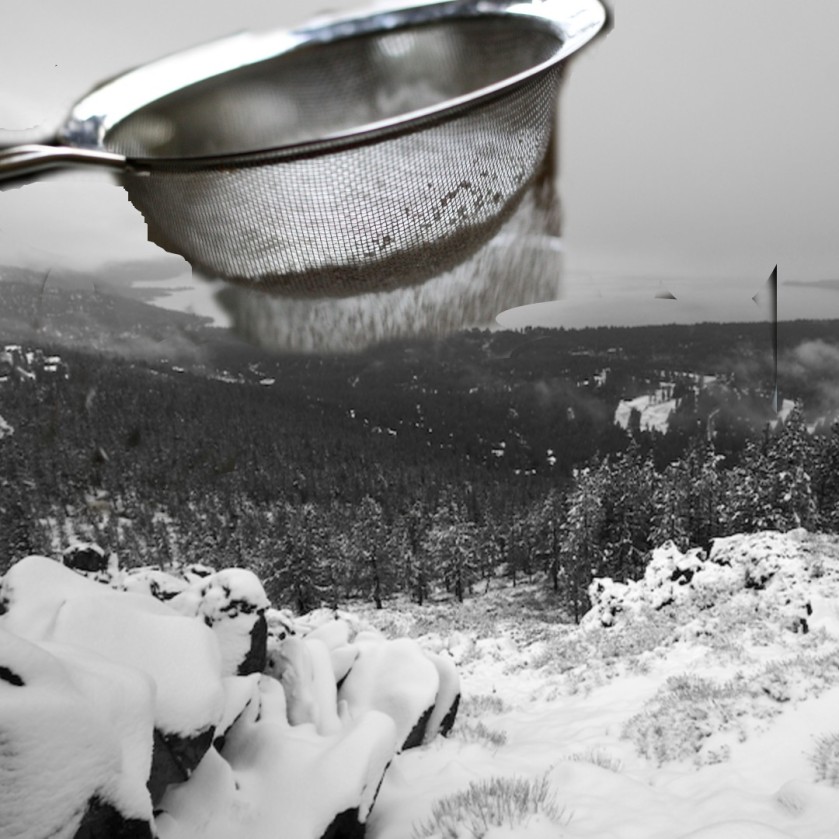
This combophoto depicts powdered sugar as snow, accumulating on a hilltop. I randomly got this idea while brainstorming ideas because I had just finished watching a baking show on the Food Network. One of the bakers made a remark about how the confectioner’s sugar they were using to make frosting looked like fluffy snow. One of the major challenges I had in creating this photo was trying to find an image of powdered sugar that made sense. A lot of the images I came across were of sugar in bags which did not really make sense if it was supposed to be snow falling out of the sky. Finally, I discovered this image of powdered sugar in a sieve being sifted. In terms of the editing, it was relatively simple and helps get the gist of my idea across.
The videos below are two different versions of visualizing a quote from an interview with American public radio personality and host of the podcast This American Life, Ira Glass. David Shiyang Liu created a kinetic type representation of the quote about 9 years ago and it’s been viewed 1.5 million times since then. (Though to be fair, at least a hundred of those viewings are by me.) Daniel Sax was inspired by Liu’s video and decided to make his own version (below). It took about a year, with the help of a handful of other artists creating images.
The quote itself is inspiring, and it’s an important message for anyone who aspires to do creative work of any kind, I believe.
Nobody tells people who are beginners — and I really wish somebody had told this to me — is that all of us who do creative work … we get into it because we have good taste. But it’s like there’s a gap, that for the first couple years that you’re making stuff, what you’re making isn’t so good, OK? It’s not that great. It’s really not that great. It’s trying to be good, it has ambition to be good, but it’s not quite that good. But your taste — the thing that got you into the game — your taste is still killer, and your taste is good enough that you can tell that what you’re making is kind of a disappointment to you, you know what I mean? A lot of people never get past that phase. A lot of people at that point, they quit. And the thing I would just like say to you with all my heart is that most everybody I know who does interesting creative work, they went through a phase of years where they had really good taste and they could tell what they were making wasn’t as good as they wanted it to be — they knew it fell short, it didn’t have the special thing that we wanted it to have. And the thing I would say to you is everybody goes through that. And for you to go through it, if you’re going through it right now, if you’re just getting out of that phase — you gotta know it’s totally normal. And the most important possible thing you can do is do a lot of work — do a huge volume of work. Put yourself on a deadline so that every week, or every month, you know you’re going to finish one story. Because it’s only by actually going through a volume of work that you are actually going to catch up and close that gap. And the work you’re making will be as good as your ambitions. It takes a while, it’s gonna take you a while — it’s normal to take a while. And you just have to fight your way through that, okay?