The Secret Language of Comics

(Fanta)stic

For my piece I drew a mad scientist character sporting two Fanta bottle caps for googles. I was really struggling with coming up with ideas for this assignments, my brain has trouble processing things in 3D. The fact that I was called by contacting tracing and put in quarantine this past week wasn’t helping anything either.

However during my stay in the plague zoo I was able to come up with one idea for a mad scientist with googles. I’ve been trying to get better at drawing humans so I figured it would be good practice as well. I based her color pallet off of soda, with green hair and an orange shirt. I used an atlas ball point pen for line work and alcohol markers for coloring.

KOBE!

I was sitting at the library when I took out a piece of gum and threw the wrapper into the garbage. As I watched the wrapper ball glide through the air, I realized that this could be a potential Sunday sketch. I unwrapped another piece of gum and crumbled the wrapper into a ball and started sketching. The reason why I chose this idea as a sketch is because almost everyone has enjoyed the satisfaction of crumbling a piece of paper into a ball and trying to throw it into a garbage can. As a child, whenever someone would shoot something, people would yell “KOBE,” hence the title. Therefore, I feel that this sketch is very relatable for everyone, and that is why I chose it.

Prompt: https://eng181s21.davidmorgen.org/assignments/sketches/sketch-2-sunday-sketches/

Week Ahead: 3

3 2/9 Literacy Narrative, part 1
2/11
  • Hillary Chute, “Comics for Grown-Ups” from Why Comics?: From Underground to Everywhere
  • Stitches — “I was fifteen” & “A few years ago I had the following dream. In the dream I was a boy of six again” (243-329)
2/14 Sketch 3: Visual Note Taking

On Tuesday, you’ve got a very short reading from Dan Roam‘s book Draw to Win to go along with Stitches. (Note that I uploaded chapters 2 and 3 but you’re only required to read chapter 3.) Roam is a corporate trainer who publishes books and presents workshops on business communication and marketing, focusing on visual clarity for communicating complex information effectively. We’ll also be doing some drawing in class.

Your first major assignment is also due on Tuesday. I’ll begin meeting with you individually to give you feedback on those drafts starting later in the week and stretching into the next.

On Thursday, we’ll read the introductory chapter from Hillary Chute’s Why Comics?, which is a major work of comics criticism that came out a couple years ago. The first 20 pages of that article provide a history of the comics medium and a discussion of why the best term for them is comics, and why graphic novel isn’t especially useful. There is a lot of useful information in that first half of the chapter and it’s worth reading — but the really important part of the chapter, which I want you to spend most of your attention on, is the latter section under the heading “Reading Comics” (21-31). If you’re going to skip reading some of the chapter — which you shouldn’t but if you’re going to — skip the first half not the second half! Come to class with at least one or two questions you have about how to read comics effectively.

Links are for humans; URLs are for computers

URLs are for computers.

They are specific addresses that tell the web browser where to go to fetch data and show it to you in one form or another. The URL for the policies page on this site is https://eng181s21.davidmorgen.org/syllabus/policies/. The URL for the oldest post on the course blog is https://eng181s21.davidmorgen.org/davids-posts/header-image-credits/. With a little awareness of the syntax, you can decode that information. If you wanted to read the page or post that I just referenced, you could copy that code and paste it into your browser to get there.

Sometimes people just paste URLs into emails or pages that they’re writing, and some applications (like the few most recent version of WordPress) will convert those URLs into links so that you at least don’t have to go to the trouble of copying and pasting the code as separate steps to get to the pages referenced. For example, one way to show you Gavin Aung Than’s comic adaptation of a quote by Jim Henson would be to just do this: http://zenpencils.com/comic/150-jim-henson-a-puppeteers-advice/. However, most of the time readers will find URLs confusing and uninviting, and it’s difficult for you to effectively contextualize that information smoothly.

[Note that his site has been neglected and the image links are broken now. Here’s the comic I’m referencing in this post.]

Links are for humans

Links use HTML code to turn URLs into something that is readable and clear for humans. One way to create a link is manually, by inserting some HTML code around text that makes the text into a link, so

Check out Gavin Aung Than’s <a href=”http://zenpencils.com/comic/150-jim-henson-a-puppeteers-advice/”>brilliant comic adaptation</a> of a quote by Jim Henson.

looks like this in your browser

Check out Gavin Aung Than’s brilliant comic adaptation of a quote by Jim Henson.

Most of the time, though, you don’t need to insert links manually. When you’re in your WordPress post editor, you can create a link by highlighting the text or image that you want to become a link and selecting the button that looks like the links of a chain, then pasting the URL into the dialog box. But if you want to add a link to a comment you’re leaving on this site, you’ll need to know the HTML code to do so.

This distinction between URLs and links is important for our class because our first learning outcome states that over the course of the semester, you will “demonstrate understanding of audience” and learn to “use and adapt generic conventions, including organization, development, and style.” Using links instead of URLs is an important first step in understanding the reading needs of your audience and is an important stylistic and generic convention of writing for the web.

This distinction is also important because using links opens up a whole range of more interesting options for you that are unavailable when you merely drop URLs into your work. Jokes can be goofy commentaries or can offer useful insight on the topic at hand.
Interested in working in the Writing Center?

A message  from  Levin  Arnsperger of  the  Writing  Center:

As Associate Director of the Emory Writing Center, I would like to encourage you to apply now to become a tutor in the academic year 2021-2022. We are recruiting students who are strong writers, listeners, and collaborators. We also believe that we are best able to serve the Emory community when our staff includes students with diverse backgrounds and competencies in a range of languages and discourses. And we are one of the highest paying and most rewarding jobs on campus. Here you can watch several current tutors talk about their work with the Writing Center: https://tinyurl.com/workforewc.

The application deadline is February 28 for positions that begin in August of 2021. We will hold three information sessions for potential applicants, on February 10, 15, and 19 – via Zoom.

You can find application instructions, the dates and Zoom link for the info sessions, and additional information on our website under “For Students”/“Work for Us.”

Avatar Sketch 1

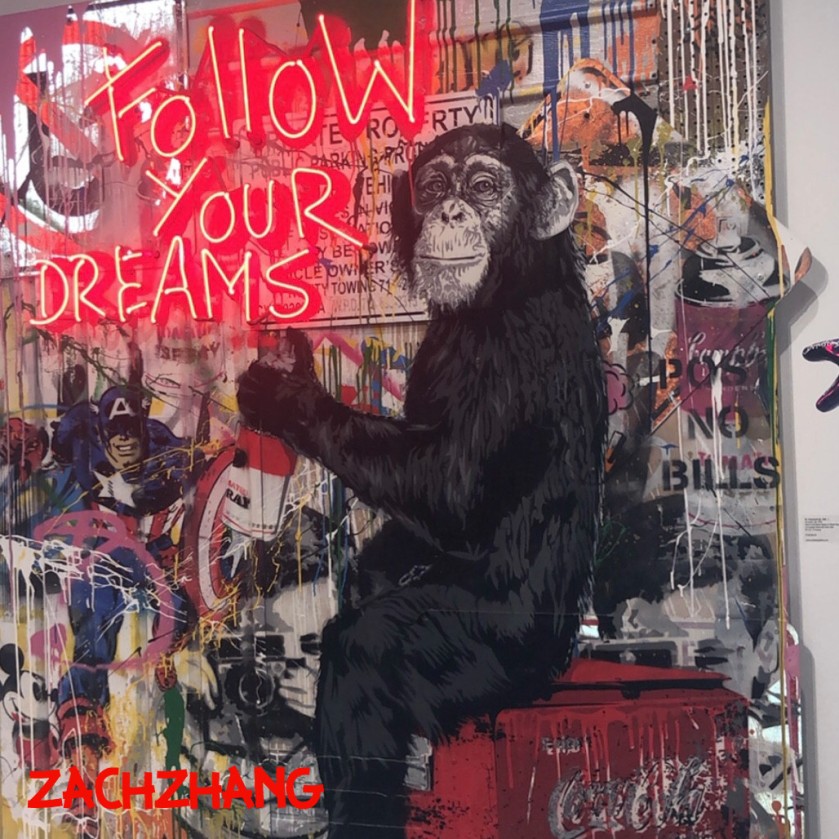
This is a picture of a monkey that I took when I went to Florida one summer. I took this picture because of the red neon “Follow Your Dreams” sign to the left of the monkey. It seems that the monkey is following his dreams and is happy so I should to. I’m guessing the monkey’s dream was to create graffiti art because of the spray can in his hand. Although the graffiti art created by the monkey is not the best, he seems to be enjoying fulfilling his dreams. His smile makes me want to follow my own dream, regardless if I succeed in achieving them or not.

Avatar

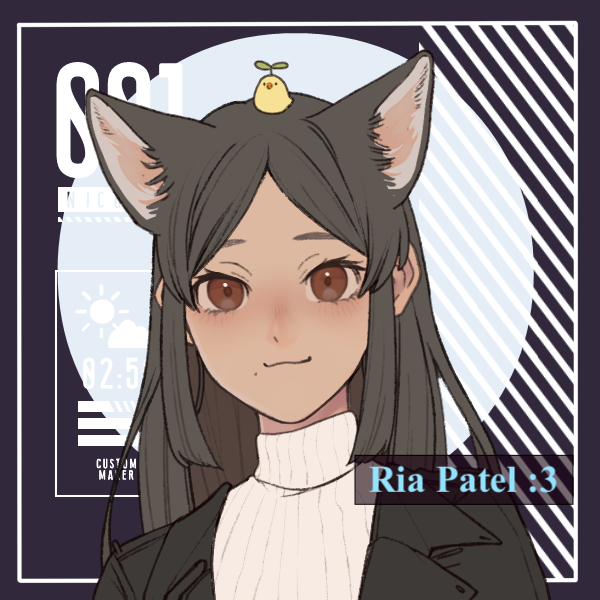
As you can tell this is my avatar for my website. I created this using an avatar maker website called Picrew, and I used Shirazu Yomi’s template to create my Avatar. [ https://picrew.me/image_maker/207297 ]


This is a semi-realistic representation of me. Of course, I don’t have cat ears in real life, but I added them to my avatar because I love cats. My Instagram for your page is filled with cat photos and memes. Though I don’t have any pets, I will adopt one once I have a stable income. They are so cute and bring me so much happiness by looking at them. As for the little bird on my head, I wanted to add it because it represents a relationship with someone who loves birds. They have a special place in my life. We can connect to a level that I haven’t with others. I wasn’t sure if I wanted to include the little bird, but I realized the avatar was not complete until I did. I added it with a smile on my face.
I wanted the avatar to represent the physical aspects of me: skin tone, eye color, hair color, and clothes. One thing that I wanted to point out was the clothes in the avatar. Right now in my life, I am trying to find my own aesthetic, especially in the way I want to present myself. Clothes are one of the best ways to express yourself, and currently, my wardrobe is mainly full of pajamas. Thanks to Covid, the only time I leave my house is to go to work which is one day a week, and I have a uniform. Otherwise, I have to be presentable is during zoom sessions where only my shoulders and up are visible. I wanted to expand my wardrobe and experiment with different types of clothes. However, that did not go as plan. Therefore, this avatar is more of a future version of myself that I aspire to be. The version that I will hopefully achieve before the fall semester when I will be on campus.

kjnlknmnkjbkkl

My Avatar

I chose to make a simple avatar that accurately reflects who I am. My last name is Burger and minus my family, everyone – including teachers and coaches – refers to me as such. I also only put “Nathan” on top instead of “Nathan Burger” because I felt as if the viewer is able to understand the picture represents my last name. I also chose to keep the drawing simple as my favorite type of art is Pop-Art. I used google drawings to create the picture itself. I drew, edited, and colored to the best of my ability to display my avatar.

The most difficult part for me was generating the work itself. I did not know how or what I could do to create something that reflected who I am. I was going to use several pictures of myself doing various activities I enjoy (working out, watching football, hanging with friends, etc.) but then creating a simple “Burger” popped in my head.

Inspired by: https://www.flickr.com/photos/christopherous/6884883534/in/photolist-buoQ1w-6GDBqV-ytUdh5-dwa7sU-5DXcih-2jovGw-8smKyG-2E47vG-8Dr6ik-5Hv1va-yDpnov-xxPpew-9rF1wx-6W38q4-M1SJ9K-qsCDbE-2gmscPM-9c1SSm-ebCsjk-6sjv3V-8q9EhY-55puzy-5psCe8-aTocCt-6dv9uW-KrVai-eqpskz-yy67EV-4oU2Lh-2eMYHzf-8haHb7-8xDKUC-bubLJ4-h1fZxp-WQ5wfm-625m9p-91aQhM-aTocvi-vDh2kc-JMxx4e-91aQkx-E48UC-9uP1VD-5V53Ch-D7QsAr-2fUS8jJ-bpFWgv-91dX9Q-aTocfn-97BckY

Sunday Sketch #1: Avatar

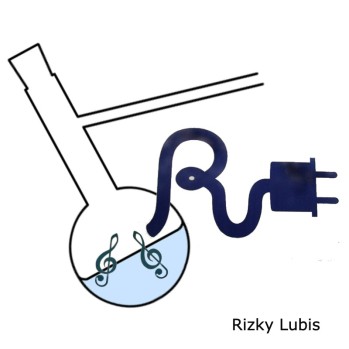
My avatar is a combination of three items: a treble clef, the letter R and a distillation flask. The electrical plug and the distillation flask represent my love for science and technology, more specifically chemistry. The treble clefs show my passion for music, and the letter R stands for my name and family (all my family members have the same first letter in their names).

As a whole this image is a collage or mixture of my interests. It is ironic that there is a distillation flask, because it is used to separate mixtures, and over the course of this blog more of my interests will be revealed. Alternatively, this image can be seen as me playing an instrument, as the tilted flask looks like a bassoon and the letter R represents myself, and the clefs at the bottom are unplayed music. Unfortunately I do not play bassoon, but I do play the violin.

css.php