The Secret Language of Comics

Halfa Kucha


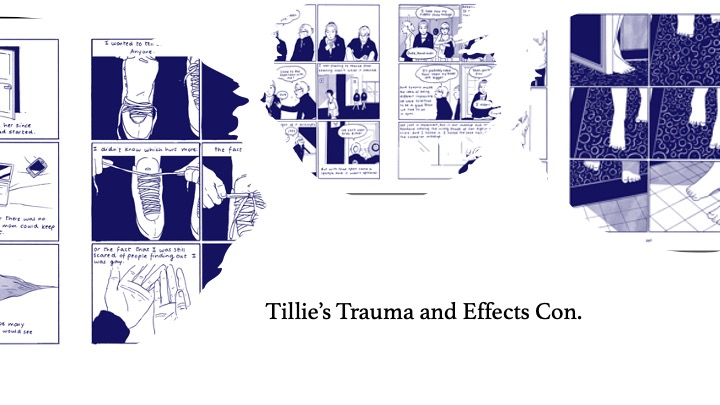
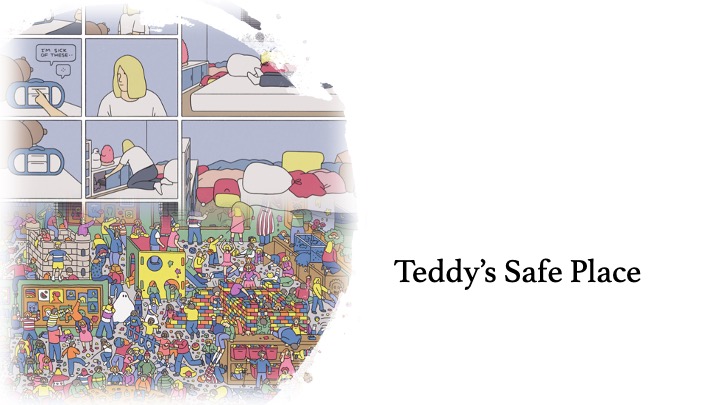
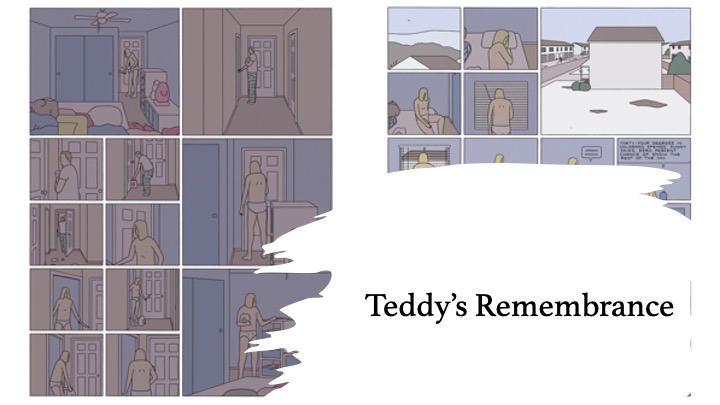
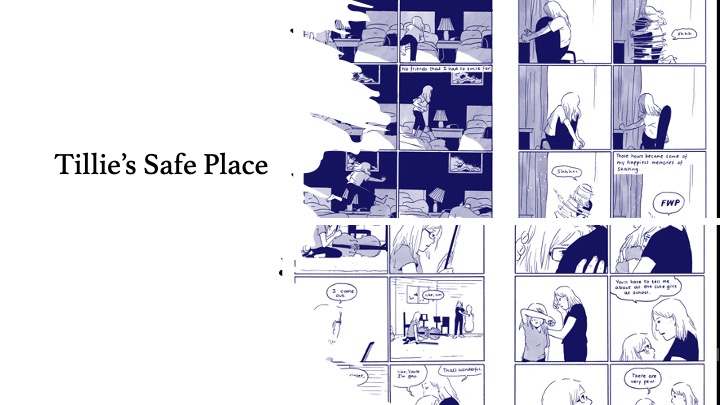
In high school, I did quite of few of presentations, and I was in theatre for 3 semester. I still get the jitters before doing something in front of a crowd, and I am fairly confident in my presentation skills. Before working on the Halfa Kucha, it thought that it would be easy to an extent because I already had an idea of what I wanted to say and present. While working on it, I went through the graphic novels looking for panels that are relevant to my vague idea then I constructed my argument. Looking back, I wished that I constructed my argument first then pick out panels. That way I can focus more on the argument and not get lost in which panels I should put in the presentation. I wasted a lot of time picking the right panels. As for the argument, I wanted to put more into it, but the time restraint held me back. Which is good for this type of assignment, it would be harder to stray off path, and I focused more on the important stuff. I liked not having to create an introduction for the presentation, describing the plot. I could just get right into it. If I were to implement that into analytical writing, I would focus on the body and then right the introduction and conclusion.

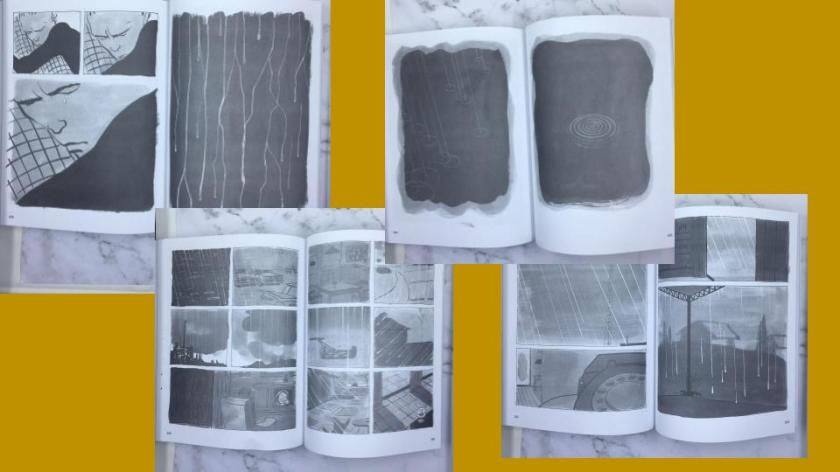
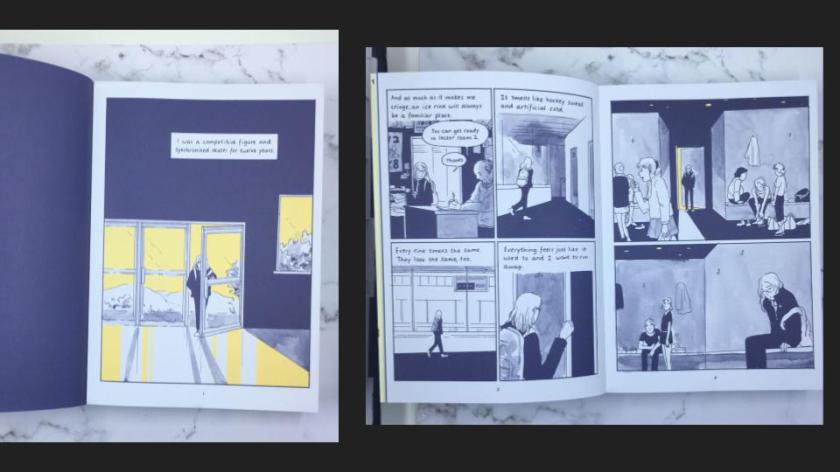
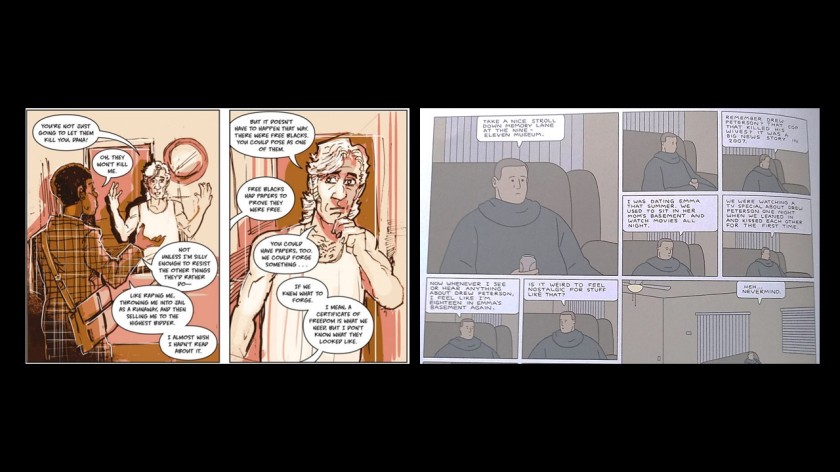
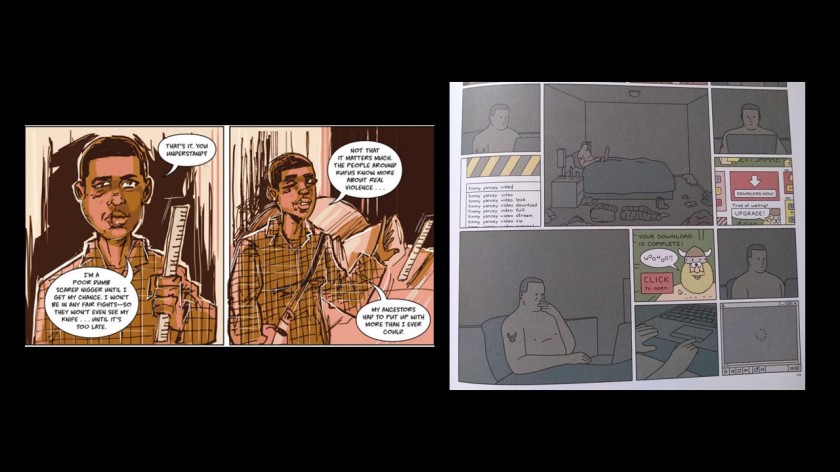
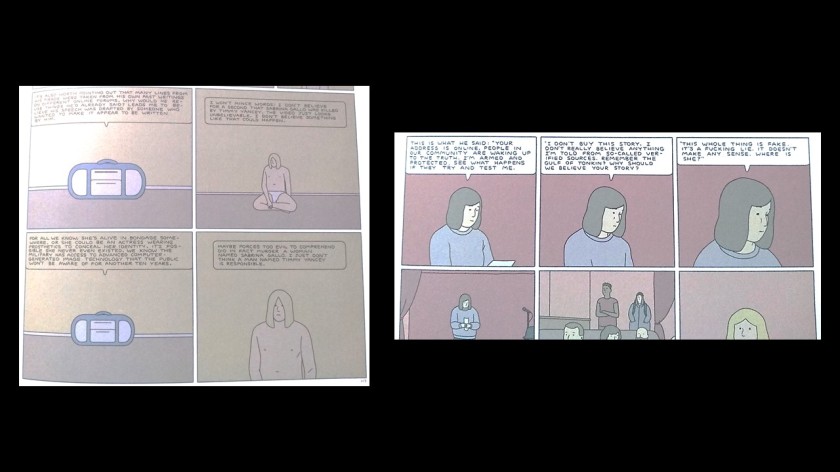
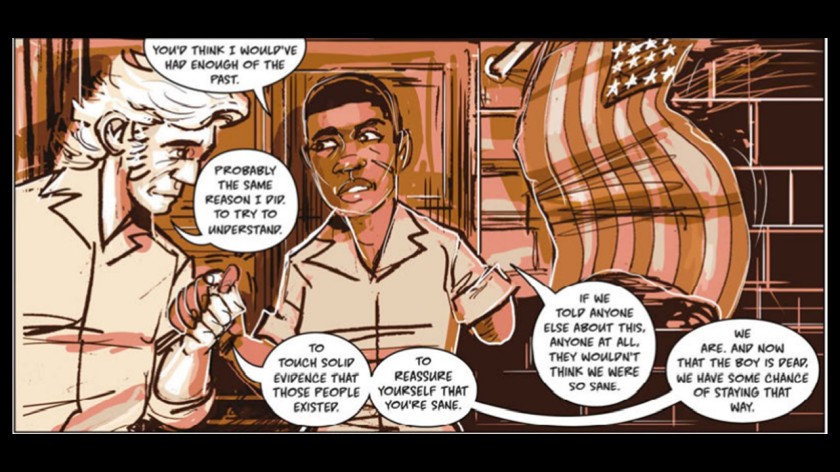
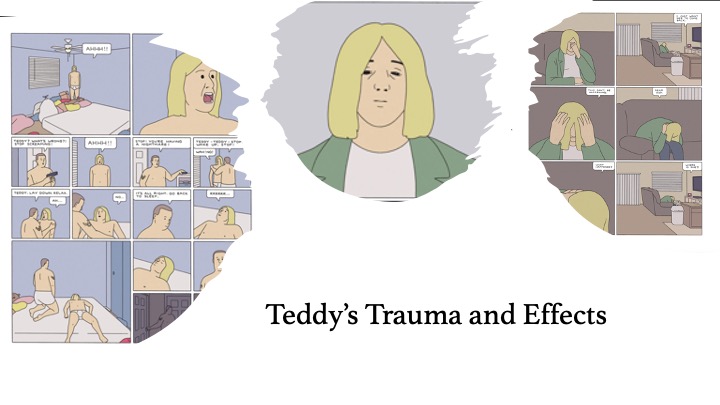
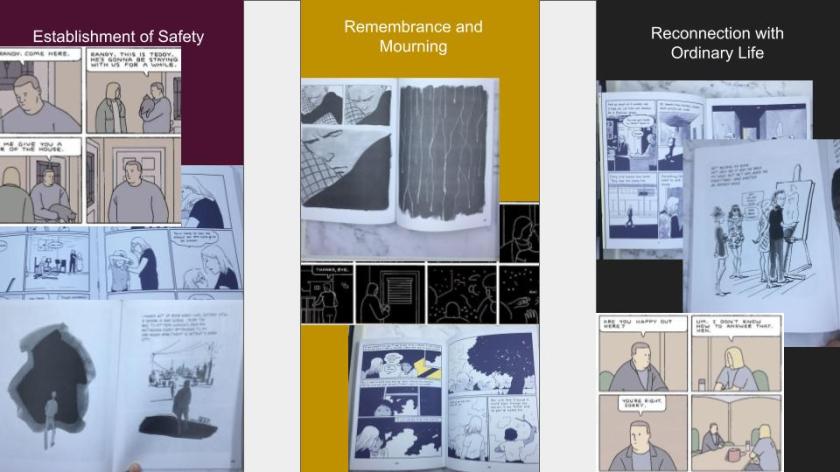
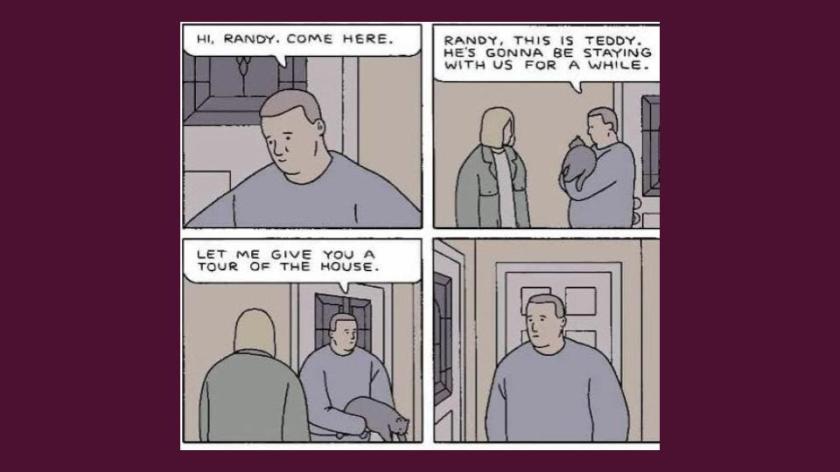
For the panels on the presentation, I wanted to focus more on what is drawn on the panel rather than the text. For Teddy’s slides, I cut out the frames where he facial expression was showing. In Sabrina, the facial expressions are kinda bland. However, there are the few times where it more realistic features to it.

Whenever I give presentations, I try not to be that one person who just reads off the slides. This assignment made sure that you won’t read off the slides. I also did not need to worry about typing my argument out; I could just say it. With the slides moving automatically, I had to make sure what I said was relevant with each slide, and I had a limited time to say it which was nerve racking. Towards the end of the presentation, I kinda went off in a tangent and was not able to say what I wanted too. Remembrance and reconnection can happen at the same time. But why? who knows because I couldn’t finish. From my fellow students’ presentation, I would try to slow down myself down and have flashcards to keep myself on track. As for future presentations in general, I would try to put less on the slides and just talk about it.
Halfa Kutcha

I have been half dreading this assignment all semester, I don’t know what happened to me in quarantine but last semester I started to get stage fright for the first time in my life. All through out high school I just never really cared about my peers watching me but something about zooms makes it all the more dreadful. Writing for this was much different than the essay’s, I have the comfort of editing during the writing process when I am working on a essay but doing this I only had my thoughts and my flash cards. While practicing for my presentation alone I found my brain running faster than my mouth and I would trip over words and start to stutter.

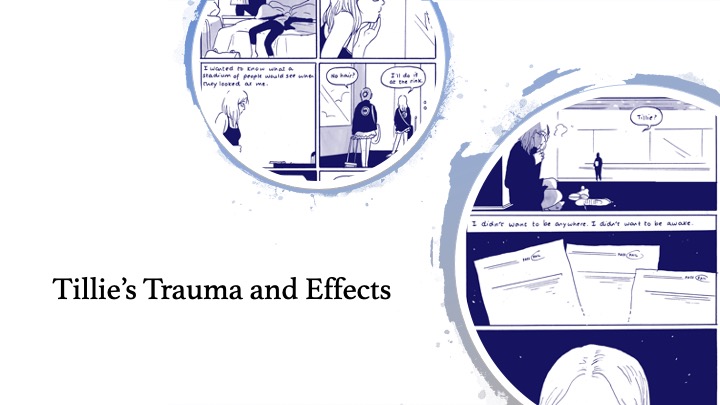
Organizing my slide show was a lot easier. I liked the idea of focusing on each of the three stages of recovery so I decided to make each section color coordinated to make it easier for both me and my audience to follow. Without doing anything outwardly visual I don’t know how I would translate that into writing other than just breaking my sections up into paragraphs. I don’t think my analytical process what any different in the making of this. I think the manor helped shaped the final product, such as me not using as complex sentences structure and having a an actually visual tp point out instead of trying to portray whatever I was talking about in the text.

I thought the timing was a really interesting part of this process. When it comes to academic situations I tend to be a pretty concise person. However I still found myself racing against the time limit on some slides. I really liked everyone else’s slides, if I were to do this again I would try and make an effect to make mine more visually appealing instead of just having a page from the comic I am referencing.

Halfa Kucha Reflection

Formulating my argument for my Halfa Kucha was not that different than forming an argument from an essay. First, I made a list of all the books we have read this semester, and I defined what I thought the trauma was in each work. After analyzing my notes, I noticed that there were many similarities between Teddy from Sabrina and David from Stitches. I then specifically found images in which Teddy and David are similar in coping with their trauma. I then checked the end of the works to compare their healing processes. I structured my presentation pretty similarly to how I would write an essay for this topic. I discussed each work on its own and then analyzed the differences and similarities between the two. If I was to make my presentation into a written work, I would not change to the format/organization too much. I thought my presentation resembled an essay in that I made a claim in the beginning followed by evidence and a short conclusion.

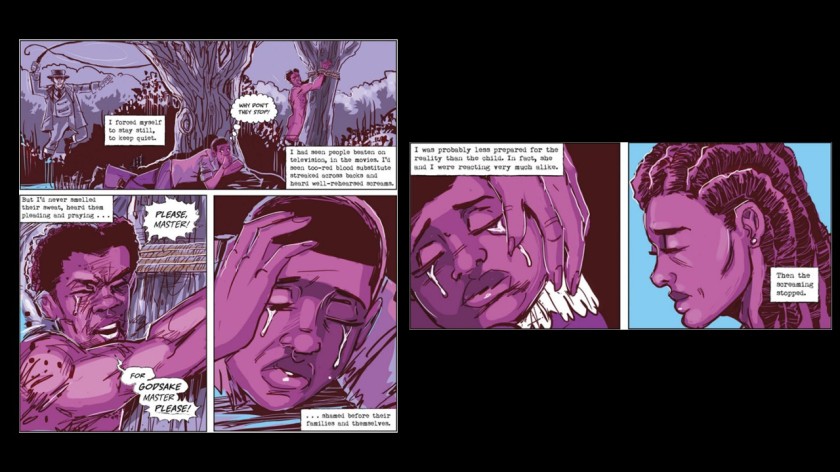
I wanted to choose visuals from each Sabrina and Stitches that would support my stated argument. For example, I found images in both Sabrina and Stitches in which Teddy and David, respectively, express their anger. For a majority of my presentation, I knew roughly what I wanted to say and found corresponding images. In some cases, the images would give more ideas, which in some cases made me change/condense some aspects of my argument. An example of this at the beginning of my presentation was when I commented on the facial expressions of both Teddy and David. Commenting on these facial expressions helped me develop my argument further to say that David was more poised to recover.

By giving this type of presentation, I learned that effective presentations do not have to be excessively long. In some instances, being perfectly concise can perhaps be as effective as giving several examples to support your argument. Something that I saw from other presentations was the inclusion of quotes. Although the medium calls for having a picture on each slide, I thought that the inclusion of a power quote on a slide was rather effective. If the presenter has the quote on screen, it is definitely more effective that way than just reading it. I think I will use this presentation technique in the future.  
Halfa Kucha Reflection

The writing process for my halfa kucha was similar to writing a paper. I brainstormed preliminary ideas about how trauma and recovery were portrayed in the two books I chose. I started with one book and then it was easier for me to directly compare the other book to those points. After I had my main points, I wrote a script for what I wanted to say in each subsection. There were two big subsections, the two themes about society’s view of the characters’ trauma, and within each subsection there were three detailed section, one for each book and one related to the quotes from Herman. I went back through, timed myself, and cut down significantly on the script so that each “paragraph” only took up 20 seconds or less. I normally write a lot of fluff because it sometimes takes me a while to get to the point depending on the writing piece I’m working on. I was surprised I didn’t have a lot more to take out when editing.

I chose visuals after writing my script. It was easier this way because I only had to look for frames that aligned with what I had written. I think it would’ve been personally harder to do it vice versa. I tried to choose scenes that the audience would recognize and wouldn’t take too much time to read. I overall didn’t mind this style of presentation. The time limit helped me cut down on what I wanted to say in order to get to the point and be concise. While giving the presentation, I didn’t like the time limit because it felt rushed and naturally, I ten to take a longer time to think about what I want to say before talking. There were points in my presentation where I had to forgo important points that I wish I had time to bring up or clarify. I liked how other people’s presentations were even more concise and really easy to follow although I think it would take a lot of time and editing for me to cut down further in my writing.

An Evening with Maia Kobabe

At first I wasn’t too sure I’d have time to attend the Maia Kobabe workshop event because I had an assignment to finish and turn in only about an hour after the event, but I ended up watching and listening on the side as I worked and I’m kind of glad I decided to.

Before the event, only being aware that it was an event in which they would discuss the process of making their graphic memoir Gender Queer, I had the assumption that I would not have much to relate to or wouldn’t fully comprehend any struggles—given that I’m a straight cis woman. However, I was surprised when, although I can’t relate or 100% comprehend the emotional process, there was a lot on the “technical” process of writing their memoir that I felt connected with Maia. They mentioned using a wacom tablet and I was instantaneously taken back to my “artist phase” in which I saved up to buy a small wacom intuos tablet because I wanted to get into digital art in like the 7th grade. My biggest shocks, however, came upon Maia saying they get inspiration from fanart, fanfiction and music, from which a large portion was Kpop. Back in middle school when I was a full-time One Direction fan, I definitely read quite a few fanfictions—it was a crazy time, at one point I even tried writing my own but gave up after 2 chapters—so hearing Maia, as a professional author—compared to fanfiction authors which from my experience are usually teens—mention fanfiction it was so odd, yet it felt relatable. Same thing when they mentioned fanfiction; these works created by fans have always seemed to me to be only presented within fan communities on social media—being presented in anyway or mentioned to the “normal” audience groups is not taken well because of the stigma around internet stan culture—so for Maia to openly talk about how writing fanfiction has helped and inspired them made me happy in a way. At the moment in which Maia talked about the music that inspires them, I felt the biggest connection of them all when I saw lots of EXO’s music spread throughout their music gallery since they’re one of the Kpop groups I listen to a lot. When they mentioned they’ve done Kpop fanart, it made me wonder what if I have probably already come across their work without knowing so?

Overall, I enjoyed listening in on the Maia Kobabe event, I got to learn about a new author and add a new book to my future reading list hehe.

Workshop with Maia Kobabe

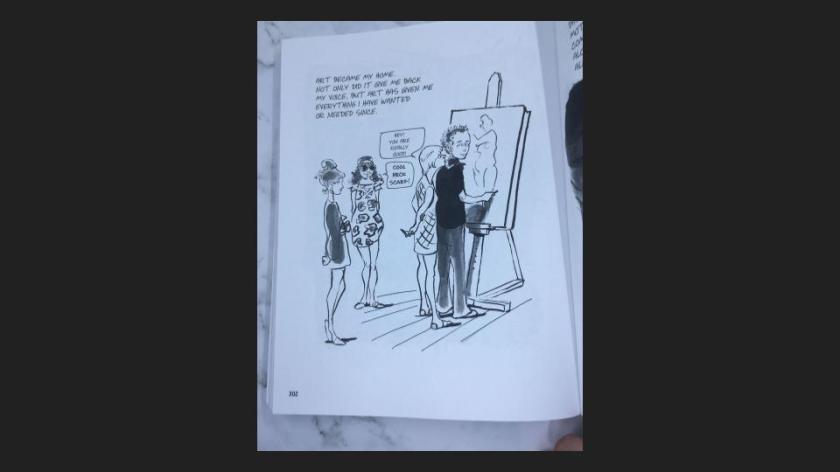
Maia Kobabe is the author of “Gender Queer: A Memoir.” In this workshop, she talks about the process of creating her work. When Maia first found inspiration and motivation for drawing comics, it was from drawing fan arts and listening to K-POP music. Her first book was “The Theif’s Tale.” She worked on it for 5 years right after she graduated her college. However, it was not popular and Maia said that it was because she did not talk about her identity. After her first series of books, she started drawing little gender-related memories in Waldorf Lesson Books. She created 60 4×4 comics in just 2 weeks. At that time, she was curious if people like her work about gender identity, but she was concerned a lot because she was not yet ready for coming out. However, after she impulsively uploaded the comics on her social media and came out to the wider audience, lots of people were interested in her work and showed her powerful and emotional reactions.
Some books helped her to get a voice and tone of “Gender Queer: A Memoir.” For example, Maia learned about herself and how to talk about sex and sexual health by reading “Oh Joy, Sex Toy.” Also, the embarrassing and private stories that she jotted down in her high school diaries became the main outline of her book. One of the longest processes that she had was designing a cover of the book. She did not want to make half male and half female, since she wanted to express her identity as non-binary. Also, she wanted to show little Maia reflecting adult Maia.
While listening to Maia’s story of creating “Gender Queer: A Memoir,” it was awesome that many people could identify their gender and learn about themselves by reading her book. Also, it was so wonderful to see the development and process.

Week Ahead: 12

12 4/13
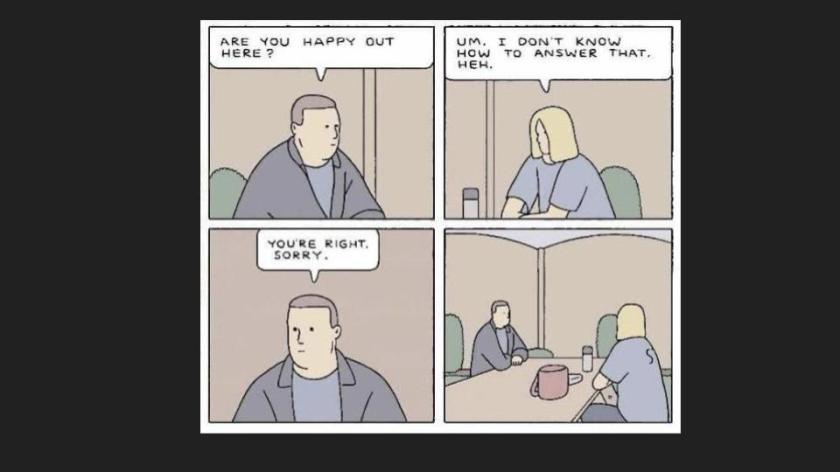
  • Good Talk chpts 36-42 (pp 294-349)
Halfa Kucha, day 1
4/15
  • Mister Miracle
Halfa Kucha, day 2
4/18 Sketch 9: Recreate a movie scene

You do not have any sort of sketch assignment due this weekend (4/12) so you can focus on putting together your Halfa Kucha presentations.

On Tuesday we’ll start with the Halfa Kucha presentations, then we’ll finish our class period discussing the ending of Good Talk. On Thursday, we’ll finish the Halfa Kucha presentations and then begin discussing our final book, Mister Miracle.

Mister Miracle was created as a character by Jack Kirby — one of the most important early comics creators, he also co-created with Stan Lee Captain America, The Fantastic Four, the X-Men, Thor, The Hulk, and Iron Man, amongst many others. Mister Miracle, a.k.a. Scott Free, was a B-list comic character in Kirby’s fairly well known Fourth World saga, a story that followed the exploits of the New Gods, who hailed from the technologically advanced planets of New Genesis and Apokolips. That series ran it’s course and, though some of its characters entered into the more maintstream comics pantheon, mostly it was forgotten about by any but pretty hardcore comics readers. Tom King and Mitch Gerads then dusted him off and made him relevant in this new series now, without changing the fundamental aspects of his character from the 70s.

You do not need to know anything about superhero comics or Jack Kirby to make sense of the comic. If you are confused at some point and think you need to know more about comics history to make sense of the story, don’t worry it’s just that the story is confusing.

Halfa Kucha Schedule

Tuesday:

  • Hannah
  • Young
  • Ria
  • Summayah
  • Abby

Thursday:

  • Eric
  • Zach
  • Martin
  • Nathan
  • Thomas
  • Rizky
  • Destiny
  • Rachel
  • Priscila
  • Kai

Wendy Xu Workshop


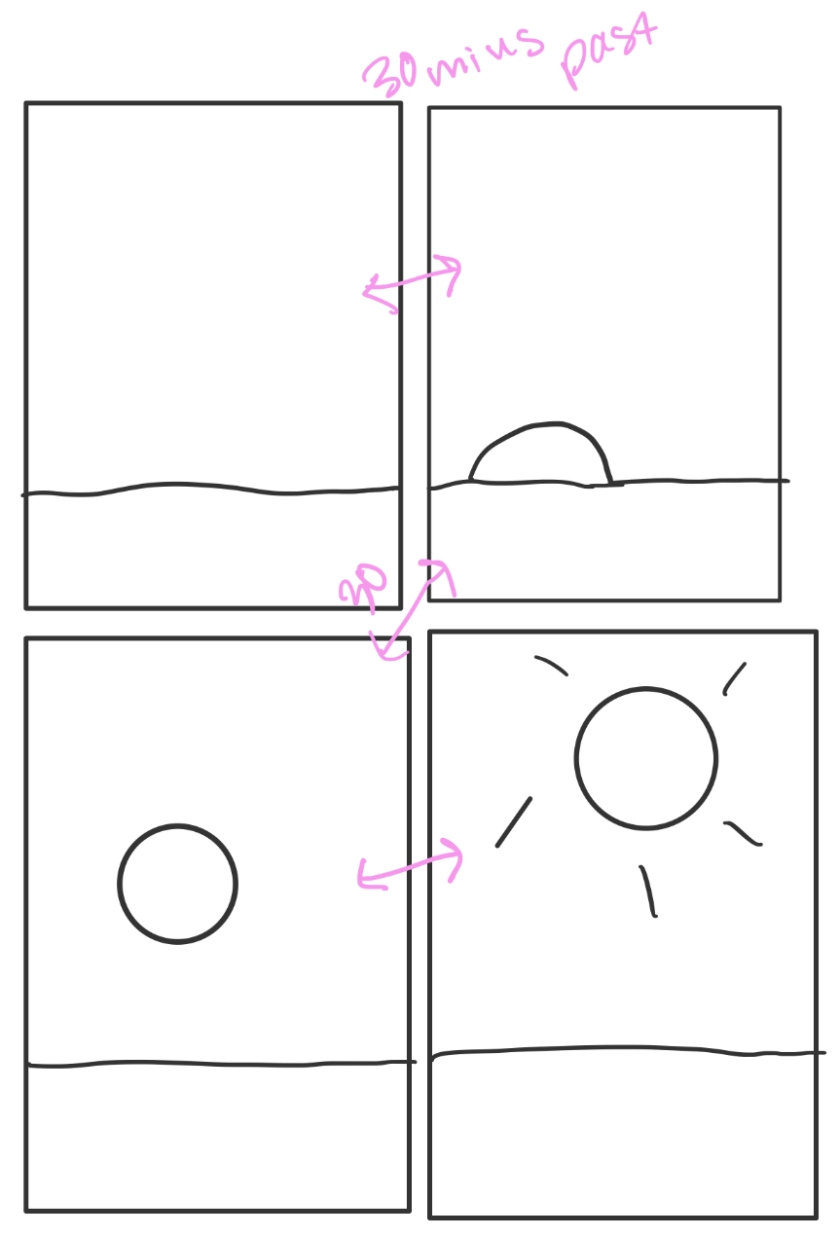
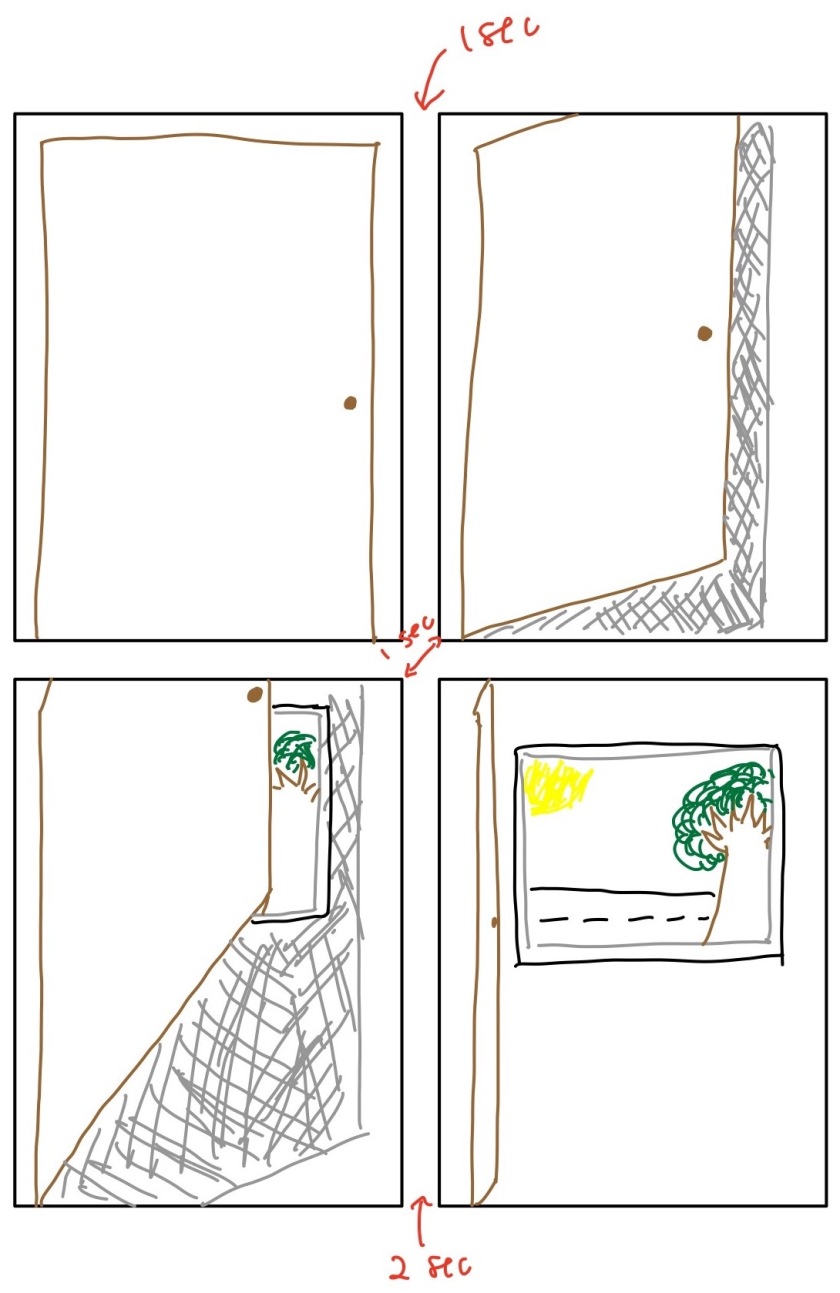
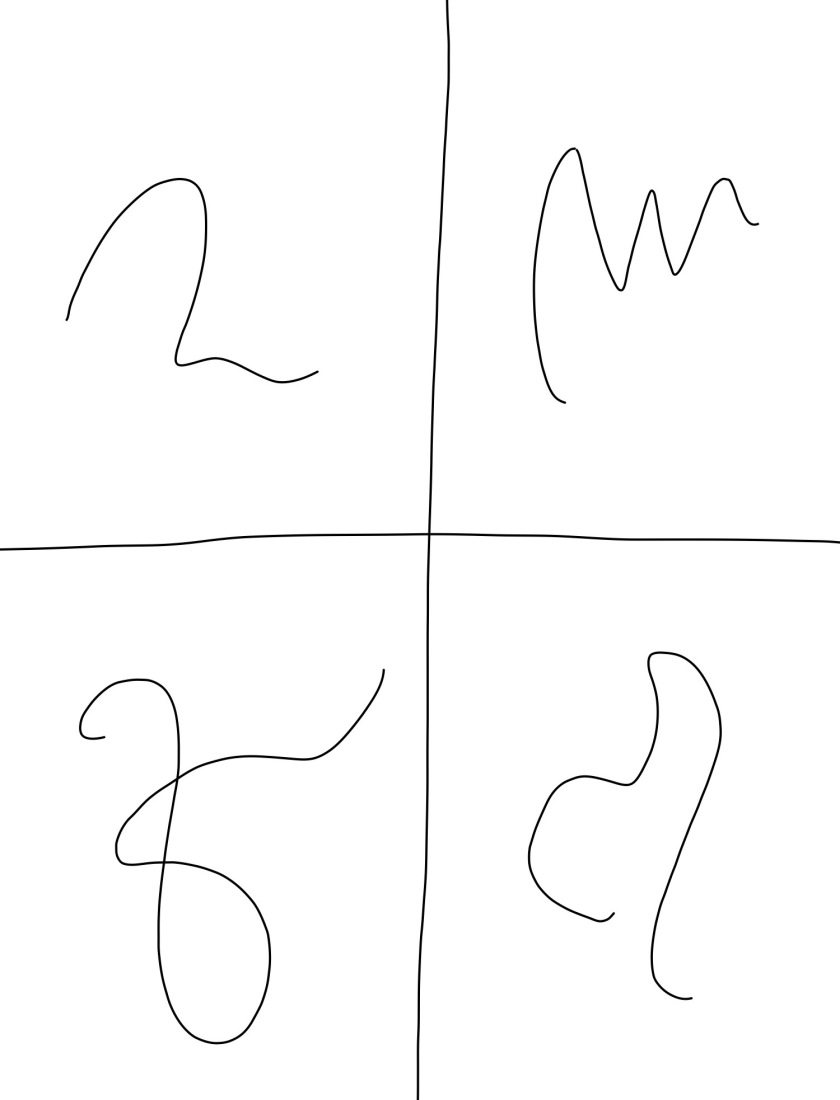
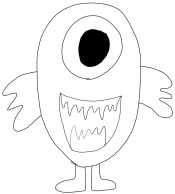
Overall, I really liked the workshop. Wendy was sociable and nice. Before the workshop, I wasn’t sure what to expect. I was surprised to how down-to-earth and relatable she was. I really enjoyed her vibe. We started off with an exercise where we created a four panel sketch, similar to what we have already done in class. The focus for this exercise was to talk about “gutters” in comics ( aka time in between the panels ). Wendy chose to depict a bird hatching from an egg where the amount of time in between each panel was different. The example did a good job in explaining the concept. Afterwards, she showed us a few of her comic panels and her thoughts will making them. We moved on to Q&A then another exercise. This exercise was focused on using your imagination to its fullest extent. We drew four frames and within those frames we had to make a scribble. From the scribble, we had five minutes to make a monster out of the line. I personally am a fan of my creation. I haven’t read her comic “Mooncake”, yet but it is definitely on my to read list.

Workshop with Wendy Xu

Wendy Xu was born in China and raised in Connecticut. When she was going to NYU, she tried to be a doctor, since she loved science and was a Psychology major. However, later she was working on “Mooncakes,” she started to draw a comic in earnest. While working on it, she did not sleep a lot, quitted his previous job, and focused on it full-time. I was surprised that she had no art experience before and could draw a comic so well. Wendy said that we do not need to be amazing artists to draw a comic. 

First Exercise

After her brief introduction and basic information, she started the first exercise. I needed to draw a 4-panel comic with a free topic. I was familiar with it, since I already drew a quadriptych for the Sunday sketch before. She wanted us to think about how much time is between each panel and said that the gutter holds the whole comic. Her explanation about moment and time in comics was interesting. She worked on the exercise with us together and drew an egg hatching in 5 minutes. Also, Wendy showed us a few images of her comic and how she indicates the time difference with backgrounds and scenery. It was awesome that just the color overall can show how the story is going on and how long each situation takes place. 

Second Exercise
Second Exercise

The second exercise we did was fun. We drew four squiggles and chose one of them to draw a monster with it. At first, it sounded hard, but while I was working on it, I could creatively make a monster with a squiggle only in five minutes. I learned that simple sketching and doodling may be a good start of a comic. This workshop was interesting!
Data Viz

Graph Produced on NCSS

With housing applications and the several quizzes and exams I’ve had in this short time span (and many more to come in the following weeks), I decided to track my overall tiredness levels, productivity levels, with my overall rating of my room’s tidiness. When I first heard of this assignment I immediately thought of scatter plots because that is an easy way to find if there are correlations or not. Unfortunately 4 dimensional or 5 dimensional scatterplots are hard to visualize, so I settled for a 3 dimensional one. The scales are all from 0-10, which is subjective by nature, but I just went off how I felt that day, so it is unfortunately not a very scientific process of scaling.

After taking down the data, I plotted a 3D scatterplot on NCSS and asked it to perform a regression analysis. In essence, I asked it to find any trends, which is indicated by the plane that looks like a red net. The error between this trend (the plane) and the data points is marked by the lines connecting data points to the plane. Overall, the more productive I was, the cleaner my room tended to be. The less tired I was the more cleaner my room tended to be as well, though a weaker correlation. There was no strong correlation between my tiredness and my productivity, which was strange. I wonder if this has any bad long term effects? In reality I could have plotted these three variables onto three two dimensional scatterplots and conducted analyses on all three, but I thought doing this was more fun, and I learned something new. Though this process was not very scientific it was still very fun and creative, but if I had to do this next time, I would probably try to make the scaling scientific and probably find an easier way to visualize the data if it had more variables.

css.php